Serving Kissimmee, Florida
Concrete Demolition
Demolition for larger, thicker or multi-section concrete jobs that go beyond a standard single-surface removal.
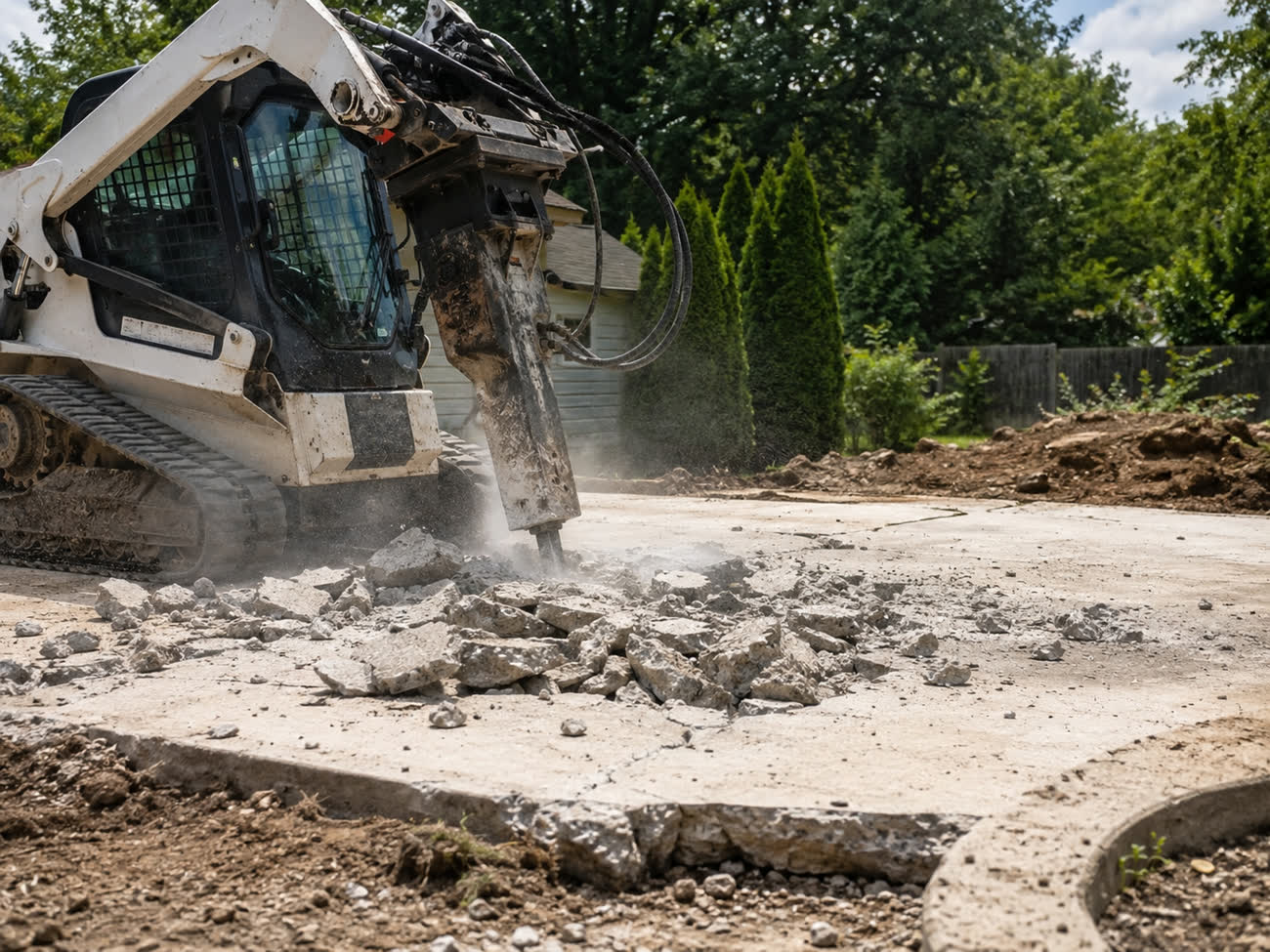
Some concrete jobs go past what a single driveway or patio removal is built for — a thicker slab, several connected sections, or simply more total concrete than a standard flatwork job accounts for. Demolition is the service for that larger scale, whether it's one heavy-duty area or multiple sections being cleared at once.
Where the line sits between a standard removal and a demolition project depends on thickness, reinforcement, and how much total material and debris the job actually produces — a single driveway or patio almost always stays a standard removal, while a large multi-section breakup or an unusually thick slab is the kind of project this service is built to handle. For Kissimmee, Florida properties, that might mean an old commercial pad, a heavily reinforced slab, or several connected slabs being cleared as one job.
Overview
What Concrete Demolition Involves
Concrete demolition is set apart by scale — more total concrete, more reinforcement, and more debris to stage and move than a single-surface removal produces.
What This Service Typically Covers
- Breaking up larger, thicker or heavily reinforced concrete than a standard single-surface removal
- Multiple connected slabs or sections cleared together as one project
- Concrete requiring more extensive separation and staging before it can be hauled
- Residential backyards, side yards or light-commercial areas with a larger volume of concrete to clear
- Loading and hauling the broken concrete off site when the scope includes it
- Cutting used first where a boundary or adjacent concrete must be preserved
Details Confirmed During the Estimate
- The total area, thickness and reinforcement of the concrete involved
- Whether one large section or multiple connected sections are being cleared together
- Access and staging room for the volume of material the project will generate
- Any boundary where adjacent concrete must remain in place
- Whether hauling and disposal are included in the scope
Larger or multi-section demolition jobs are typically reviewed on site rather than estimated from a description alone, since volume and access affect the project as much as the concrete itself.
Ready to Discuss Your Concrete Demolition Project?
Share a few details and get the scope reviewed.
When
When Concrete Demolition May Be Appropriate
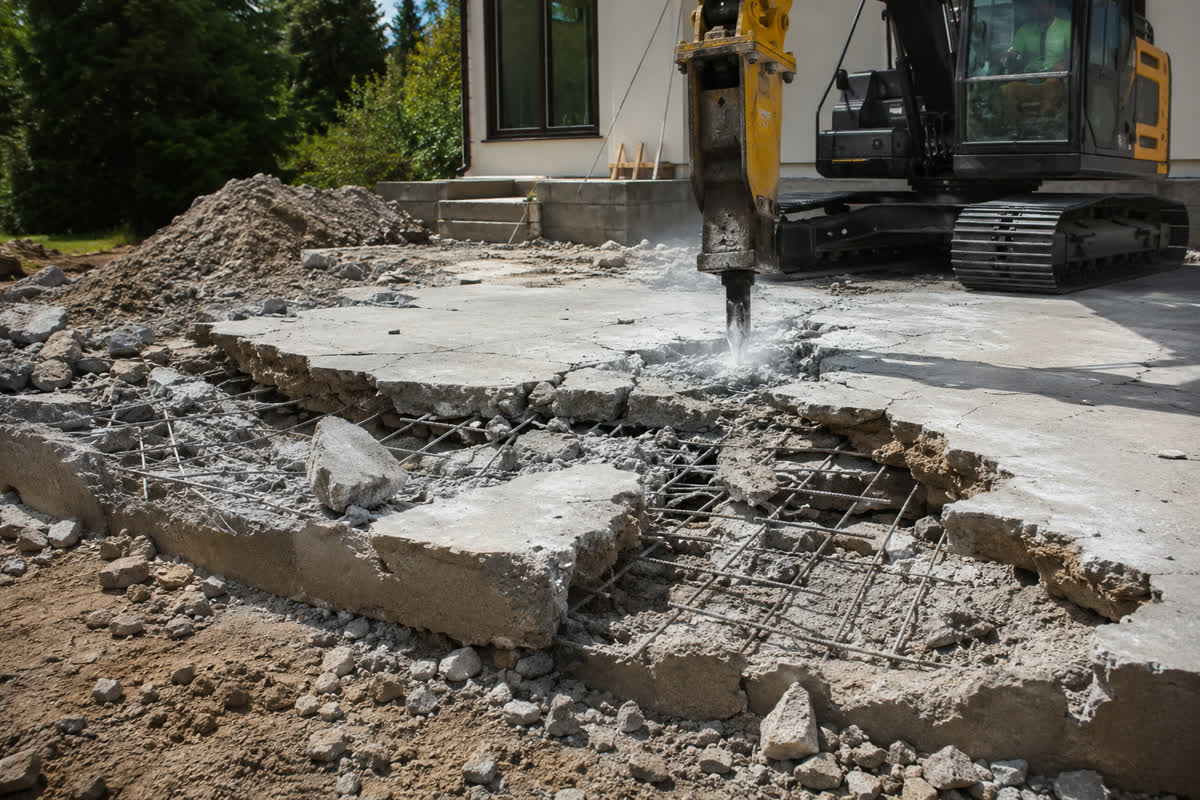
A single driveway or patio almost always stays within a standard removal, even when it's cracked or old. Demolition becomes the better fit once a slab is unusually thick, heavily reinforced, or connected to enough other concrete that breaking it up produces a genuinely large volume of debris — an old commercial pad, a heavily reinforced equipment pad, or several adjoining sections being cleared as one project are common examples.
Multiple connected slabs or sections on the same property are also often demolished together rather than treated as separate jobs, since the debris, access and staging needs overlap. And a demolition scope can come up as part of a larger site change — clearing a property ahead of redevelopment, or removing several generations of concrete left behind by past additions and site changes.
Process
How Concrete Demolition Is Approached
- 01
Reviewing the Area and Confirming Scale
The concrete is reviewed on site to confirm total area, thickness, reinforcement and how many sections are involved — details that shape a demolition project more than they would a single-surface removal.
- 02
Confirming Boundaries and Access
Any adjacent concrete that must remain in place is identified, along with access for equipment and enough room to stage a larger volume of material than a standard removal produces.
- 03
Breaking Out the Concrete
The concrete is broken into manageable sections across the full area or each connected slab. Cutting may be used first where a boundary or adjoining concrete needs to stay intact.
- 04
Clearing the Site to the Agreed Scope
Broken concrete is separated, loaded and cleared according to the agreed scope, including whether hauling and disposal are part of the project. The larger volume typical of a demolition job is planned for from the start rather than handled as it comes up.
Scope
What Shapes the Scope and the Estimate
Total area, thickness and reinforcement set the baseline, and all three tend to run higher on a demolition project than a standard removal — a slab thick enough or reinforced heavily enough to take real effort to break down is often what tips a job from removal into demolition in the first place. Whether one large section or several connected slabs are involved matters just as much, since multiple sections usually mean more staging and sequencing than a single surface.
Access and debris volume are their own concern at this scale — equipment needs room to work and broken concrete needs somewhere to stage before it's hauled, and both take more planning when the job produces significantly more material than a typical driveway or patio removal. Nearby property features, landscaping and any boundary where adjacent concrete stays in place round out what's reviewed, usually on site rather than from a description alone, before a scope and estimate are set.
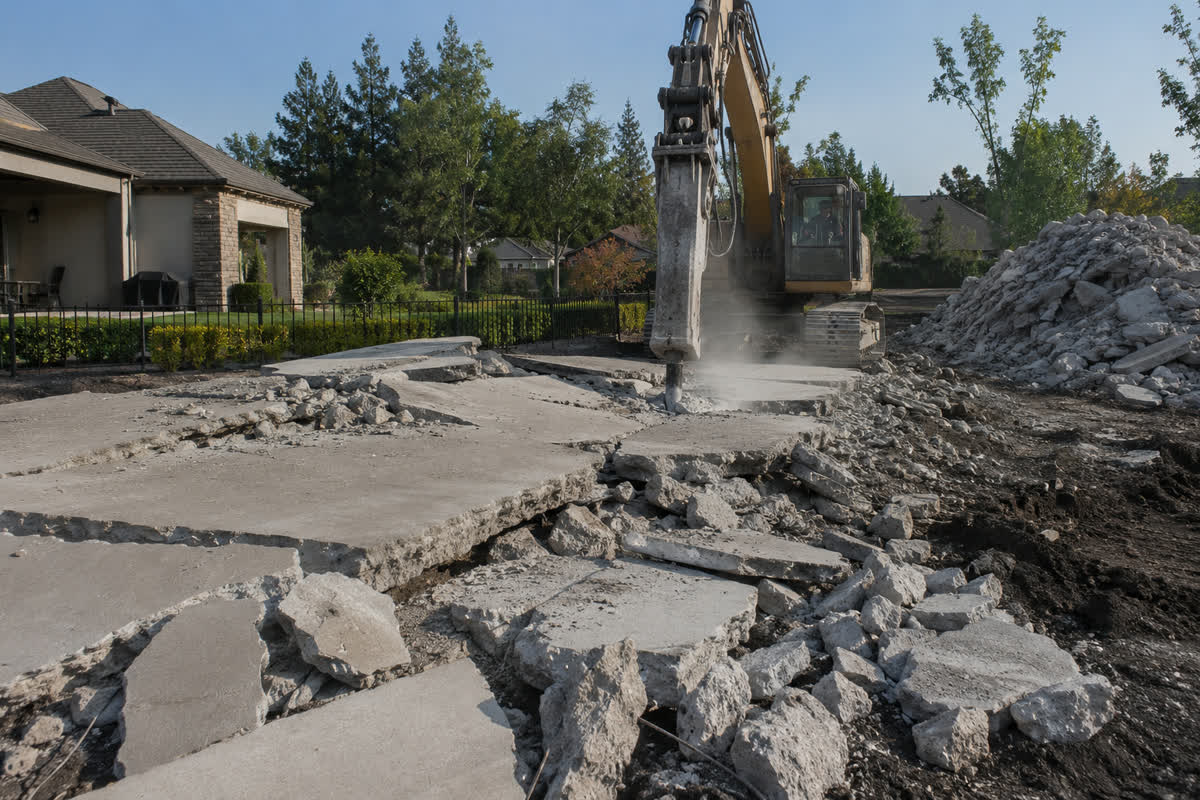
Larger, multi-section demolition work produces significantly more debris to stage, load and haul.
Not the Right Fit?
A single driveway, patio or similar standard-size surface is typically handled as concrete removal rather than demolition. Demolition fits when the concrete is unusually thick or reinforced, or when multiple connected sections add up to a genuinely large volume of material. When only a boundary needs to be cut so a defined section can be separated from concrete that's staying, that's the work of concrete cutting alongside either service.
Learn more about Concrete RemovalRelated
Related Services
Questions
Frequently Asked Questions
What makes a job concrete demolition instead of a standard removal?
Scale, mostly — total thickness, reinforcement and how much concrete and debris the project produces. A single driveway or patio almost always stays a standard removal; a much larger, thicker or multi-section job is where demolition applies.
Does a bigger demolition job need more site access than a standard removal?
Often, yes. More total concrete means more broken material to stage and load, so access and staging room are reviewed specifically for the volume a larger or multi-section job is expected to produce.
Can several connected slabs be demolished together as one project?
Yes. Multiple connected or nearby sections are frequently handled under a single scope rather than as separate jobs, since staging, access and hauling needs overlap across them.
Is reinforced concrete handled differently in a demolition project?
Reinforcement affects how much effort it takes to break the concrete down, which is part of why heavily reinforced slabs are more often scoped as demolition than a standard removal. The specific reinforcement is reviewed on site rather than assumed.
Can part of a larger concrete area be left in place during demolition?
Yes. A boundary can be set so that adjacent concrete stays intact, with cutting used first to keep that edge clean where needed.
Ready to Discuss Your Project?
Review the available services and prepare the basic details of your project to request an estimate.