Serving Kissimmee, Florida
Slab Removal
Removal of a standalone concrete pad or slab — old shed bases, equipment pads and similar bounded areas with no larger connected surface.
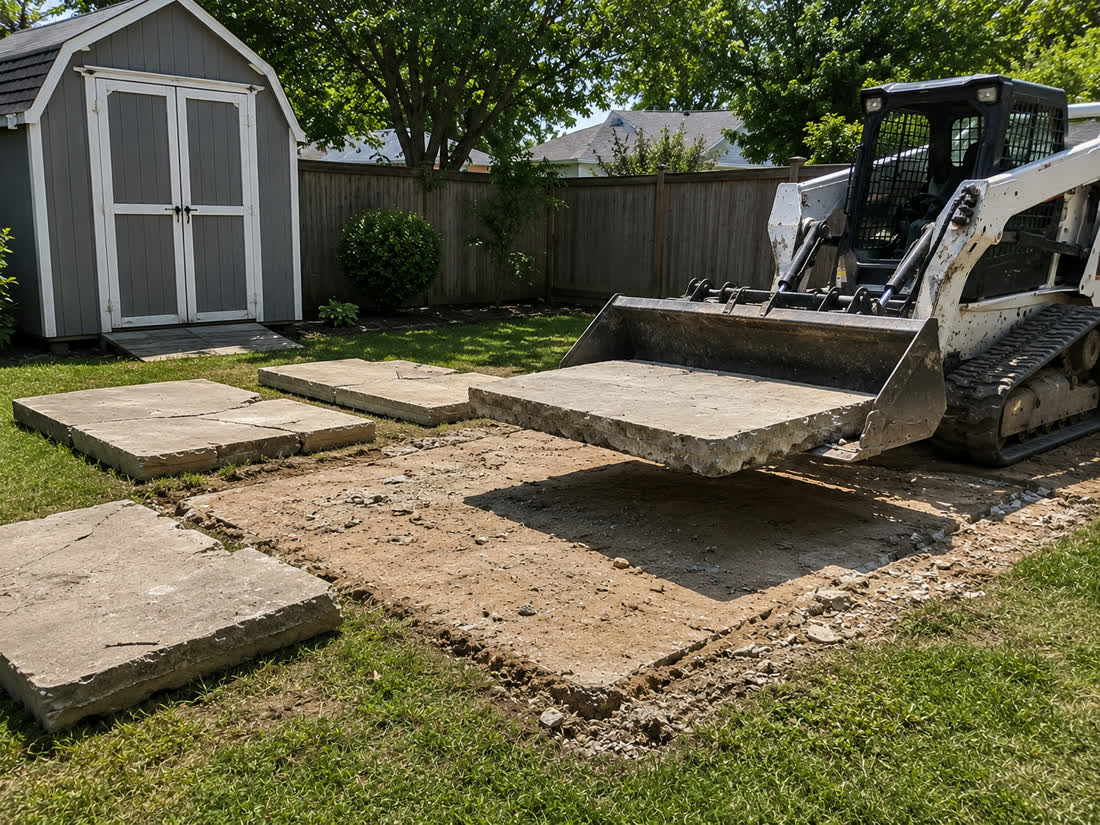
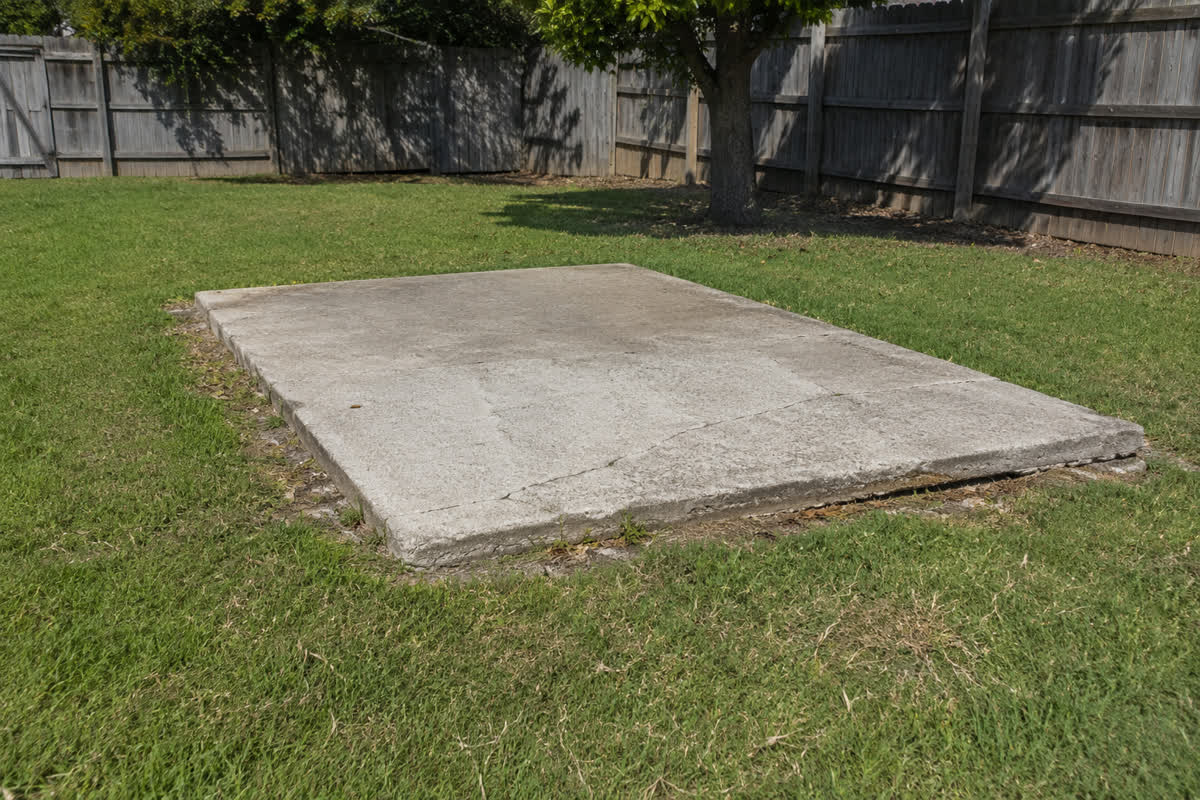
Not every concrete surface on a property is attached to anything else. A shed pad, an old equipment base, or a slab left over from a structure that's since been removed can sit on its own in a yard, with no driveway, patio or walkway connected to it — that's the case slab removal covers.
That's different from a patio or driveway, where the concrete connects to a much larger surface or the house itself, and different from foundation or structural work, which this service doesn't take on. Slab removal covers the concrete pad itself — full or a defined section — for Kissimmee, Florida properties clearing out a standalone slab.
Overview
What Slab Removal Involves
A slab removal starts from a simpler premise than most concrete work: the pad stands alone, with little else nearby that the job has to work around.
What This Service Typically Covers
- Breaking or separating a standalone concrete pad or slab, full or a defined section
- Old shed bases, equipment pads, and similar bounded areas not connected to a larger surface
- Slabs left behind after a shed, storage unit or other small structure has been removed
- Reinforced and unreinforced slab concrete across a range of thicknesses and ages
- Loading and hauling the broken concrete off site when the scope includes it
Details Confirmed During the Estimate
- Whether the slab is fully standalone or connects to a larger surface that must stay intact
- Whether the project is a full removal or a partial removal with a defined boundary
- Access for equipment and hauling material out of the yard or side area
- Whether anything is still sitting on the slab that needs to be cleared first
- Whether hauling and disposal are included, and the agreed post-removal condition of the area
This page covers the concrete pad itself. Structures still sitting on a slab, foundation or structural work, and any replacement surface, are outside this scope and confirmed separately.
Ready to Discuss Your Slab Removal Project?
Share a few details and get the scope reviewed.
When
When Slab Removal May Be Needed
A standalone slab often outlasts whatever it was built for — a shed that's gone, equipment that's been moved, or a small structure taken down years ago, leaving a bounded concrete pad with no real use. The slab itself might also be cracked, uneven or deteriorated enough on its own to warrant removal, independent of anything else on the property.
Removal also comes up when a yard is being reorganized — a pad limiting how a side yard or backyard can be used, or a slab sitting exactly where a new shed, landscaping or other project is planned. Since a standalone slab isn't attached to a driveway or patio, it can typically come out on its own without the boundary considerations a partial driveway or patio removal involves.
Process
How Slab Removal Is Approached
- 01
Confirming the Slab and Its Boundaries
The slab or section intended for removal is confirmed, along with whether it's fully standalone or connects to a larger surface that needs to stay intact.
- 02
Clearing the Area and Confirming Access
Belongings or any remaining structure on the slab are cleared beforehand, and access for equipment through gates or the yard is confirmed. Known drains, irrigation or utility features nearby are pointed out ahead of time.
- 03
Breaking Out the Slab
The slab is broken or separated into manageable sections. Where only part of it is coming out, cutting may be used first to keep that edge clean against the concrete staying in place.
- 04
Loading and Clearing the Broken Concrete
Included debris is loaded and cleared according to the agreed scope, including whether hauling and disposal are part of the project. What's left afterward is whatever was defined beforehand; a replacement surface is separate work.
Scope
What Shapes the Scope and the Estimate
Slab dimensions and concrete thickness set the baseline, and reinforcement such as rebar or wire mesh affects how it breaks down. Whether the slab is genuinely standalone or actually connects to a larger surface matters most of all — a true standalone pad doesn't require protecting or matching an adjoining driveway or patio edge, which simplifies the boundary work compared to a partial removal on a connected surface.
Access is usually straightforward on a standalone slab, though fences, gates or a side-yard path can still narrow how equipment reaches it. Nearby landscaping, irrigation, drains or known utilities factor in as well, along with staging space and whether hauling is included — all reviewed together before a scope and estimate are set.
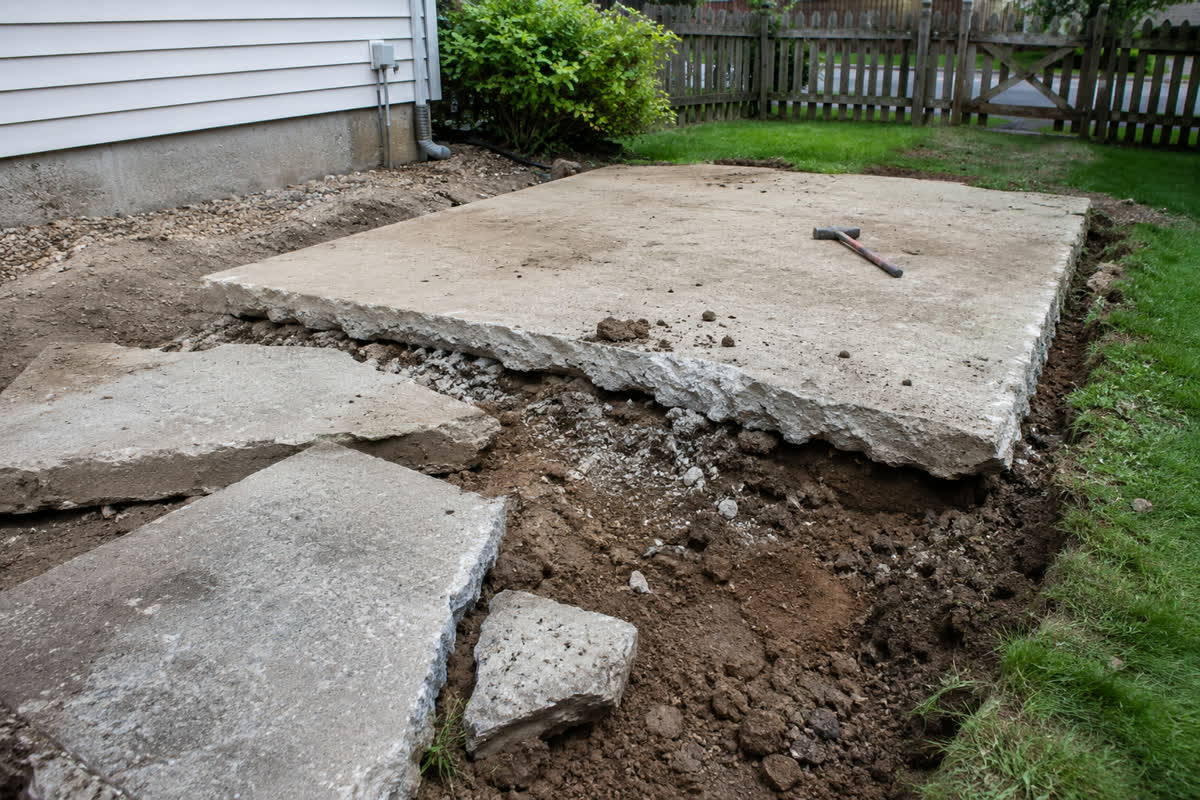
A standalone slab can be broken and lifted in sections without protecting an adjoining driveway or patio edge.
Not the Right Fit?
Slab removal fits when the concrete is a standalone pad with nothing larger connected to it. A slab that's part of a full driveway or patio is handled through that dedicated service instead, since removing part of a connected surface involves protecting or matching an adjoining edge that a standalone pad doesn't have. And a slab that's unusually large, thick or one of several being cleared together may be better scoped as concrete demolition.
Learn more about Concrete RemovalQuestions
Frequently Asked Questions
Does slab removal include grading or preparing the ground afterward?
No. Removal covers the concrete pad itself; grading, fill or a replacement surface are handled as separate work, though the condition the area should be left in is confirmed as part of the scope.
What if there's still a shed or structure sitting on the slab?
The slab is removed once it's clear — a shed, storage unit or other small structure on it is expected to be cleared or taken down first, since this service covers the concrete pad, not what's built on top of it.
How do I know if my concrete is a standalone slab or part of a larger surface?
If nothing else — a driveway, patio or walkway — connects to it, it's typically a standalone slab. Where the line falls on a specific property is confirmed during review rather than assumed from a description.
Can a standalone slab be removed if it's larger or thicker than a typical shed pad?
It depends on the size and thickness involved — a single oversized or heavily reinforced pad may be better scoped as concrete demolition rather than a standard slab removal, which is confirmed once the slab is reviewed.
Is access usually easier for a standalone slab than for a driveway or patio?
Often, yes, since a standalone pad doesn't carry the vehicle-access or house-adjacency considerations a driveway or patio removal does — though fences, gates or a narrow side yard can still affect how equipment reaches it.
Ready to Discuss Your Project?
Review the available services and prepare the basic details of your project to request an estimate.