Serving Kissimmee, Florida
Hauling and Disposal
Loading and hauling broken concrete debris away from the property as part of an agreed removal, demolition or cutting scope — not a standalone junk-pickup service.
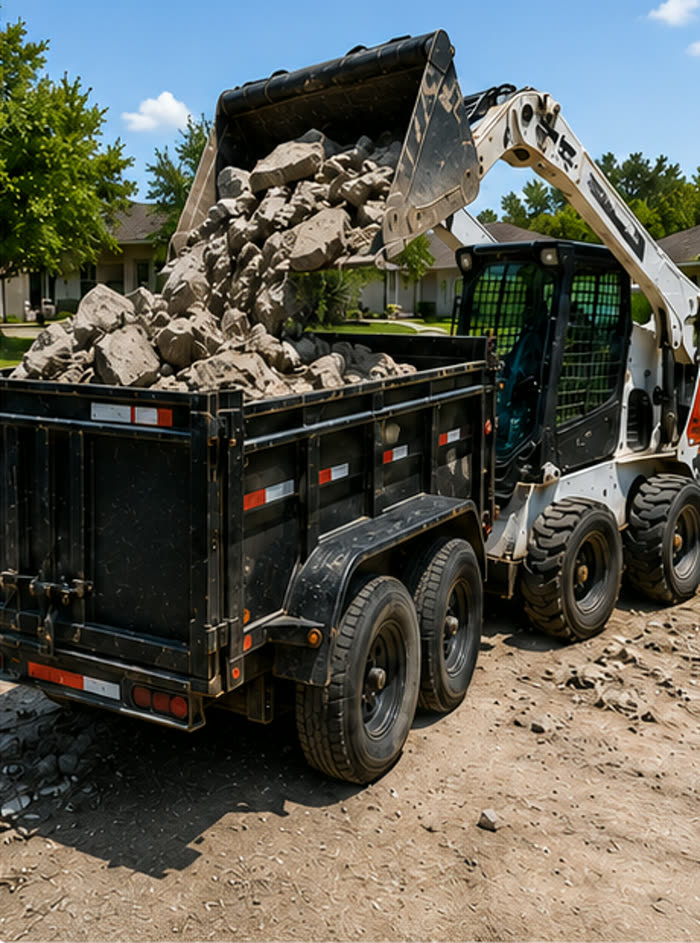
Breaking up concrete is only half the job — the broken material still has to leave the property, or someone has to plan around it staying. Hauling and disposal is the logistics side of a concrete project: loading debris, moving it out, and confirming what condition the work area is left in once it's gone.
It isn't offered as its own junk-removal service — hauling and disposal applies to debris generated by a removal, demolition, slab or cutting project on the same property, and it's confirmed as part of that project's scope rather than assumed to come with it automatically.
Overview
What Hauling and Disposal Involves
How much debris a project produces, and how it gets off the property, is its own set of decisions — separate from breaking the concrete up in the first place.
What This Service Typically Covers
- Loading broken concrete debris from the work area once it's been broken up
- Hauling that debris away from the property
- Debris from a removal, demolition, slab, driveway, pool-deck or cutting project, handled under the same overall scope
- Staging and loading material for larger or multi-section jobs that produce more debris
- Confirming the condition the work area is left in once debris is cleared
Details Confirmed During the Estimate
- Whether hauling and disposal is included in the agreed scope for the related project
- The total volume of broken concrete the project is expected to generate
- Access for a trailer or hauling vehicle to reach the debris
- Space available on the property for staging material before it's loaded
- Whether debris is coming from one area or several, and how that affects loading
This page covers loading and hauling debris that results from a concrete project already underway. It doesn't function as a standalone junk-removal service, and it doesn't assume a specific disposal destination, recycling arrangement, or dump fee — those are confirmed separately.
Ready to Discuss Your Hauling and Disposal Project?
Share a few details and get the scope reviewed.
When
When Hauling and Disposal Is Included
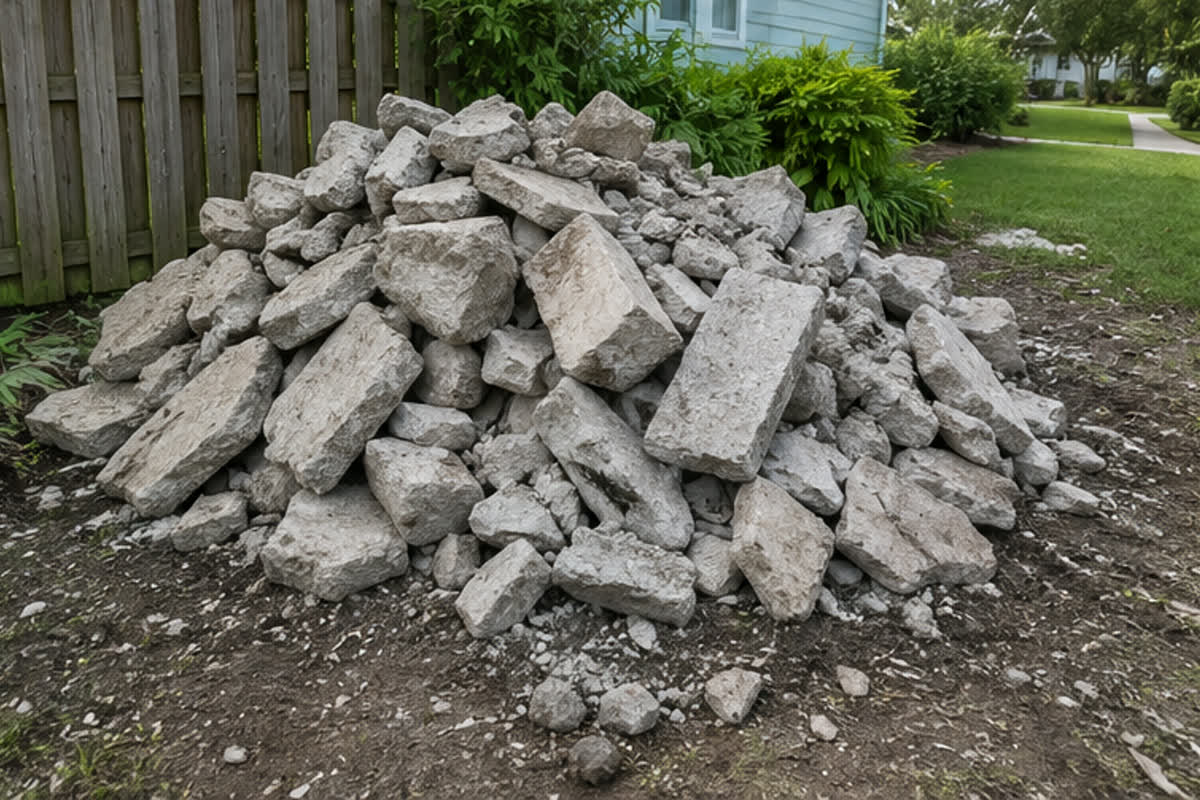
Any concrete removal, demolition, slab or cutting project produces broken material that has to go somewhere. On a small job, an owner might prefer to handle that themselves; on a larger one, or where the property has little room to store broken concrete, hauling it off site as part of the same project is often the more practical plan.
How much debris a project produces, and how long it can realistically sit staged on the property, both factor into whether hauling and disposal makes sense to include. It isn't decided in isolation — it's confirmed alongside whatever removal, demolition or cutting scope is generating the material in the first place.
Process
How Hauling and Disposal Is Approached
- 01
Confirming Whether Hauling Is Part of the Project
Whether hauling and disposal is included is confirmed when the overall project scope is set, alongside the related removal, demolition or cutting work generating the debris.
- 02
Reviewing Access and Staging
Access for a trailer or hauling vehicle is reviewed ahead of time, along with where broken material can be staged on the property before it's loaded.
- 03
Loading the Broken Concrete
Broken concrete is loaded from the work area once it has been broken up, with larger or multi-section jobs staged and loaded in stages as the volume requires.
- 04
Clearing the Site
Debris is hauled away from the property as part of the agreed scope, and the work area is left in whatever condition was defined beforehand.
Scope
What Shapes the Scope and the Estimate
Total volume of broken concrete is the biggest factor — a small driveway section and a large multi-section demolition don't haul the same way, and the difference shows up in staging time, loading effort and how many trips it takes to clear the property. Whether the debris comes from one area or several also matters, since spread-out material takes more coordination to gather and load than a single work area.
Access is the other major piece — a trailer or hauling vehicle needs a real path to the debris, and tight gates, narrow side yards or limited parking can shape how a job is staged as much as the concrete itself does. All of this is reviewed together with whatever removal, demolition or cutting scope is generating the debris, since hauling isn't priced or planned on its own.
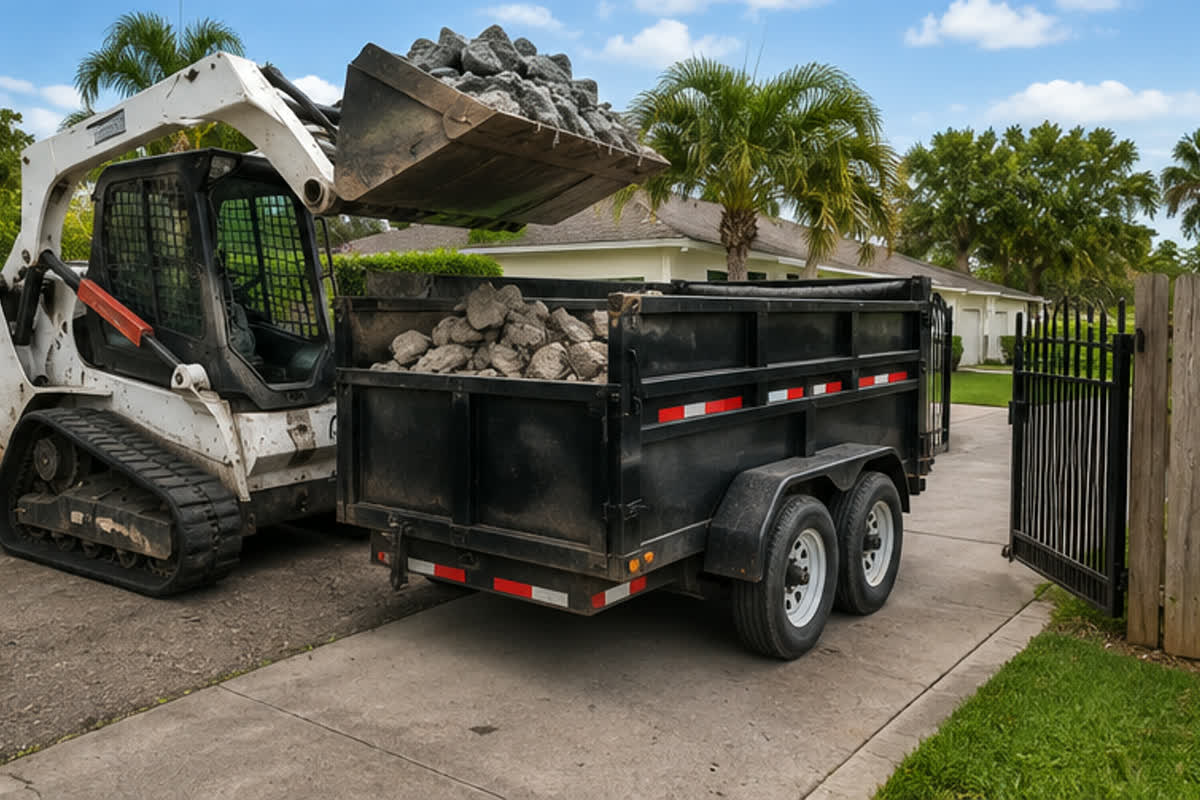
Broken concrete is loaded and hauled out along the access path once staging is complete.
Not the Right Fit?
Hauling and disposal only makes sense alongside a project that's already generating debris — a concrete removal, demolition, slab or cutting scope. If a property owner prefers to keep or handle the broken concrete themselves, that's a normal and available choice, confirmed the same way hauling would be. This isn't a standalone junk-removal service, so debris that didn't come from one of those projects isn't part of what's covered here.
Learn more about Concrete RemovalRelated
Related Services
Questions
Frequently Asked Questions
Is hauling and disposal available without a removal, demolition or cutting project?
No. It applies to debris generated by one of those projects on the same property, rather than functioning as a standalone junk-removal service.
Where does the broken concrete go once it's hauled away?
That's confirmed separately rather than assumed — this page doesn't specify a disposal destination or recycling arrangement, since that depends on the project and what's arranged for it.
Does a bigger project need a different hauling plan than a small one?
Yes. Total debris volume affects staging, loading and how many trips it takes to clear the property, so larger or multi-section jobs are planned for that volume specifically rather than treated the same as a small one.
What if there's limited access for a trailer or hauling vehicle?
Tight gates, narrow side yards or limited parking are reviewed ahead of time, since they can affect how a hauling plan is staged as much as the amount of debris does.
Can debris from more than one area of the property be hauled in the same trip?
It can be planned that way, though debris spread across several areas takes more coordination to gather and load than a single work area, which is factored into the scope.
Ready to Discuss Your Project?
Review the available services and prepare the basic details of your project to request an estimate.