Serving Kissimmee, Florida
Concrete Removal
Full or partial breakout and clearing of unwanted concrete flatwork — driveways, patios, walkways and pads — for residential and light-commercial properties.
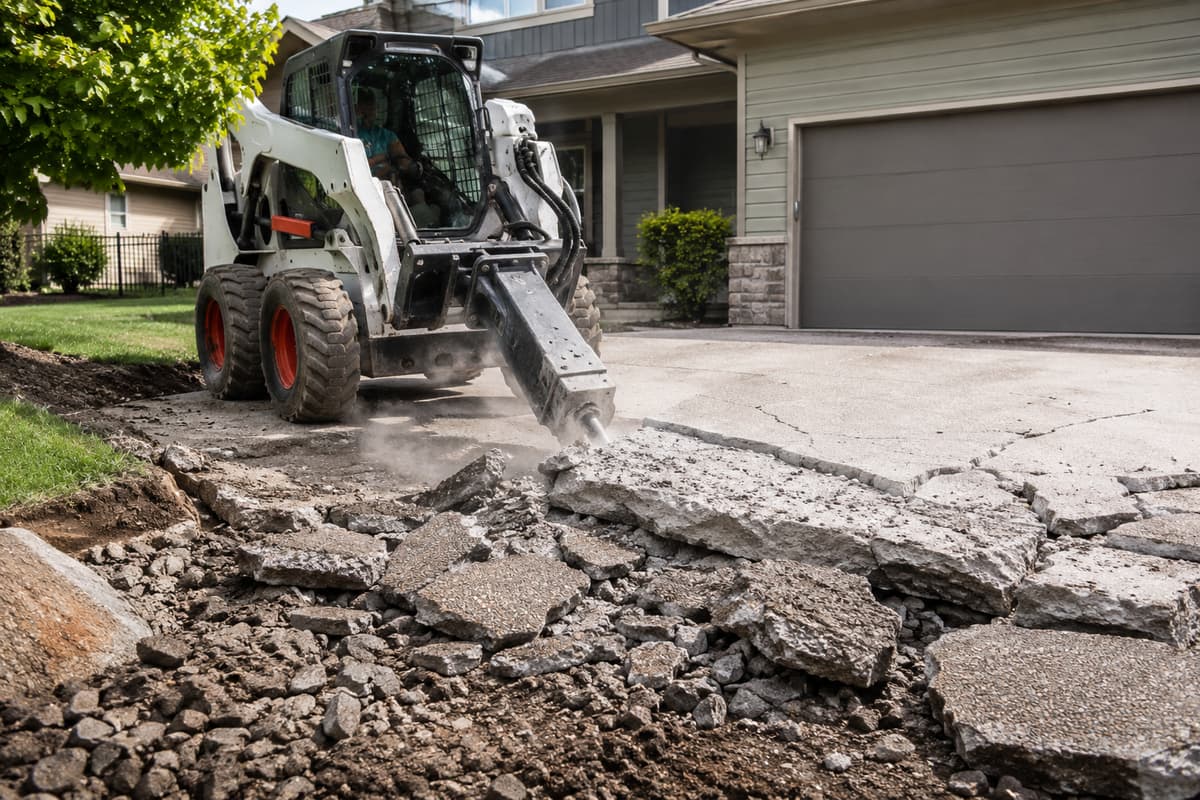
Concrete removal is the work of breaking apart old flatwork and clearing the broken concrete from the work area, according to the agreed scope, so a space is ready for whatever comes next. For homeowners and light-commercial property owners around Kissimmee, Florida, that usually means a driveway that has cracked and heaved, a patio that no longer suits the yard, or a slab left behind by something taken out long ago.
As the broad, surface-spanning version of this service, it applies to driveways, patios, walkways and equipment pads of almost any age. A whole surface can come out, or only a defined part of one, with the adjacent concrete intended to remain. What comes afterward — pouring a replacement, grading or filling the ground, or building something new — is a separate project, not part of taking the existing concrete away.
Overview
What Concrete Removal Involves
Concrete removal is defined as much by what it leaves in place as by what it takes out.
What This Service Typically Covers
- Breaking slabs and flatwork into sections that can be lifted and moved out of the work area
- Full removal of a surface, or a defined portion with adjacent concrete intended to remain
- Reinforced and unreinforced concrete across a range of thicknesses and ages
- Driveways, patios, private walkways, and equipment or utility pads
- Loading and hauling the broken concrete off site when the scope includes it
Details Confirmed During the Estimate
- Whether the project is a full removal or a partial removal with a defined boundary
- Access, staging space, and nearby concrete or features intended to remain
- Whether hauling and disposal are included
- The agreed post-removal condition of the area
- Whether replacement, grading, fill, compaction, landscaping, or other follow-on work is part of the requested project
This page focuses on private-property concrete flatwork. Public right-of-way and specialized demolition scopes require separate review.
Ready to Discuss Your Concrete Removal Project?
Share a few details and get the scope reviewed.
When
When Concrete Removal Makes Sense
Concrete often comes out because it is cracked, settled or deteriorated. A driveway that has cracked through, a walkway that has lifted at its joints, or a patio that has settled unevenly are common reasons an owner decides a surface should be removed. The page describes these conditions rather than judging what any surface needs — the direction for a project is set by the owner and confirmed during review.
Just as often the concrete is sound but no longer wanted. A pad may outlast the shed or equipment it once held, or a slab may sit right where a new addition or garden is planned. Removal also comes up inside larger changes — before a yard is relandscaped or a site is cleared for other work, the existing concrete has to be out of the way first.
Process
How a Concrete Removal Job Goes
- 01
Walking the Area and Setting Boundaries
The job starts by confirming which concrete is leaving and which is intended to remain, and defining the boundary between them. Known irrigation, lighting, drains, utilities and other nearby features shared during review let the work plan around them, along with access for equipment and for staging broken material.
- 02
Separating the Section That Comes Out
When only part of a surface is being removed, the concrete is separated along the defined boundary to help divide the selected section from the concrete intended to remain, with exact conditions reviewed as part of the scope. On a full removal the slab is still worked in controlled sections rather than all at once.
- 03
Breaking Out and Loading the Material
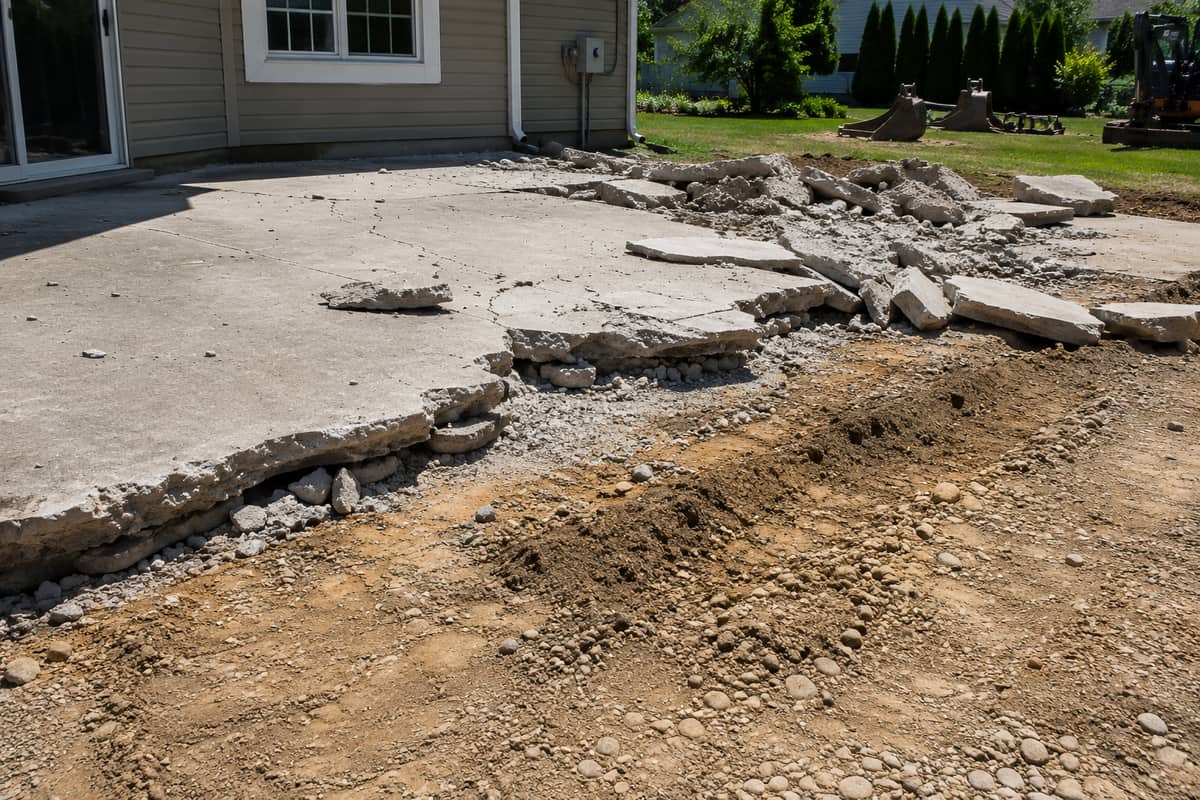
The concrete is broken into pieces sized for the site and moved out of the work area, with any rebar or mesh worked free as the sections come apart. From there it is loaded for haul-off or staged in an agreed spot, depending on what the scope includes.
- 04
Clearing to the Agreed Scope
Once the concrete is out, the work area is cleared to the extent set in the scope — the debris included in the agreed scope is removed, or material is left for the owner to handle. The post-removal condition of the area is defined beforehand, and grading, fill, compaction or a replacement surface are handled as separate work.
Scope
What Shapes the Scope and the Estimate
No two removals are alike, and a few details decide how involved a job is. The size and thickness of the surface set the baseline, and reinforcement such as rebar or wire mesh affects how the concrete is broken down. What surrounds the work matters too — buildings, fences, landscaping and any known irrigation, lighting or utilities shared during review all affect how the area is reached and where a boundary is defined when part of a surface stays.
The rest is logistics: how equipment reaches the concrete, where broken material can be staged before it moves, and whether hauling is included in the job. Because these differ so much from one property to the next, a useful estimate depends on them — describing the surface and its surroundings when you request an estimate is what turns a rough idea into a firm scope.
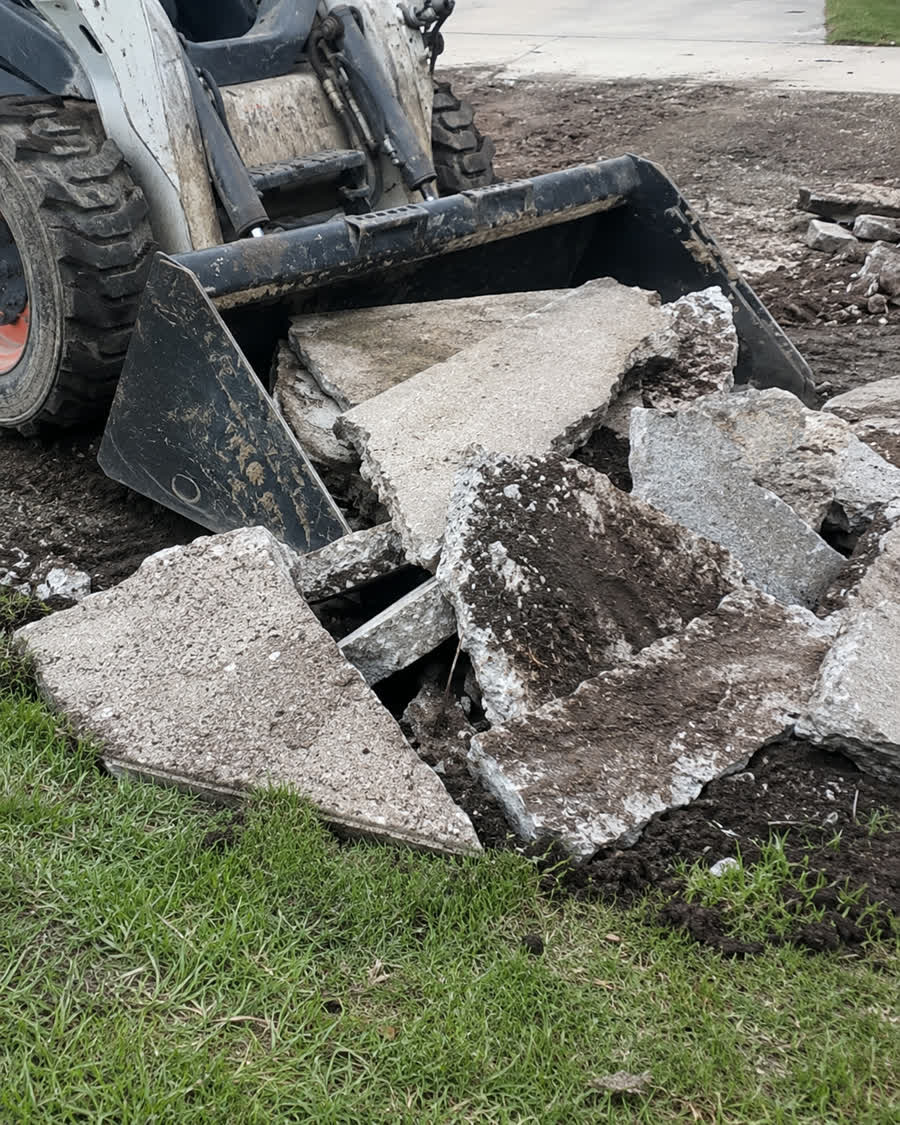
Broken concrete can be staged and loaded for hauling when debris removal is included in the agreed project scope.
Local
Private Flatwork, Not Public Right-of-Way
This page describes concrete removal on private property. Public sidewalks, curbs, roadways and other right-of-way areas fall outside the service described here, even though a private walkway on a Central Florida lot often runs right up to one. Because that line between private flatwork and a public area is easy to mistake, ownership and the exact work boundaries are worth confirming before the scope is finalized, so it is clear which concrete a project actually covers.
Not the Right Fit?
If the whole surface is going, straightforward removal is the fit. But when only one section of a driveway, patio or slab should come out and the adjacent concrete is intended to remain, defining that boundary first is what shapes the job. Setting and separating along a defined line is what concrete cutting focuses on, so it is the better starting point when a specific portion has to stay.
Learn more about Concrete Cutting & SectioningRelated
Related Services
Questions
Frequently Asked Questions
Is hauling and disposal included?
Not by default. Loading and hauling the broken concrete off the property can be built into the job, but it is confirmed as part of the scope — some owners prefer to keep or handle the material themselves.
Can just one section be removed instead of the whole surface?
Yes. A defined section can be removed while the adjacent concrete is intended to remain, with the boundary defined first. When setting and separating along that boundary is the main concern, that is really the work of concrete cutting.
What condition is the area left in?
That is defined in the scope. After the concrete and the debris included in the scope are removed, the post-removal condition is whatever was agreed beforehand; grading, fill, compaction or a new surface on top are separate work.
How is this different from concrete demolition?
Concrete removal generally covers defined flatwork such as driveways, patios, sidewalks, pool decks and standard slabs. Concrete demolition is used for larger, thicker, reinforced or multi-section concrete. It does not include houses, buildings, complete structures or swimming-pool shells.
Ready to Discuss Your Project?
Review the available services and prepare the basic details of your project to request an estimate.