Serving Kissimmee, Florida
Patio Removal
Patio concrete removal planned around the house it sits against — exterior walls, doors, thresholds and whatever else nearby has to stay undisturbed.
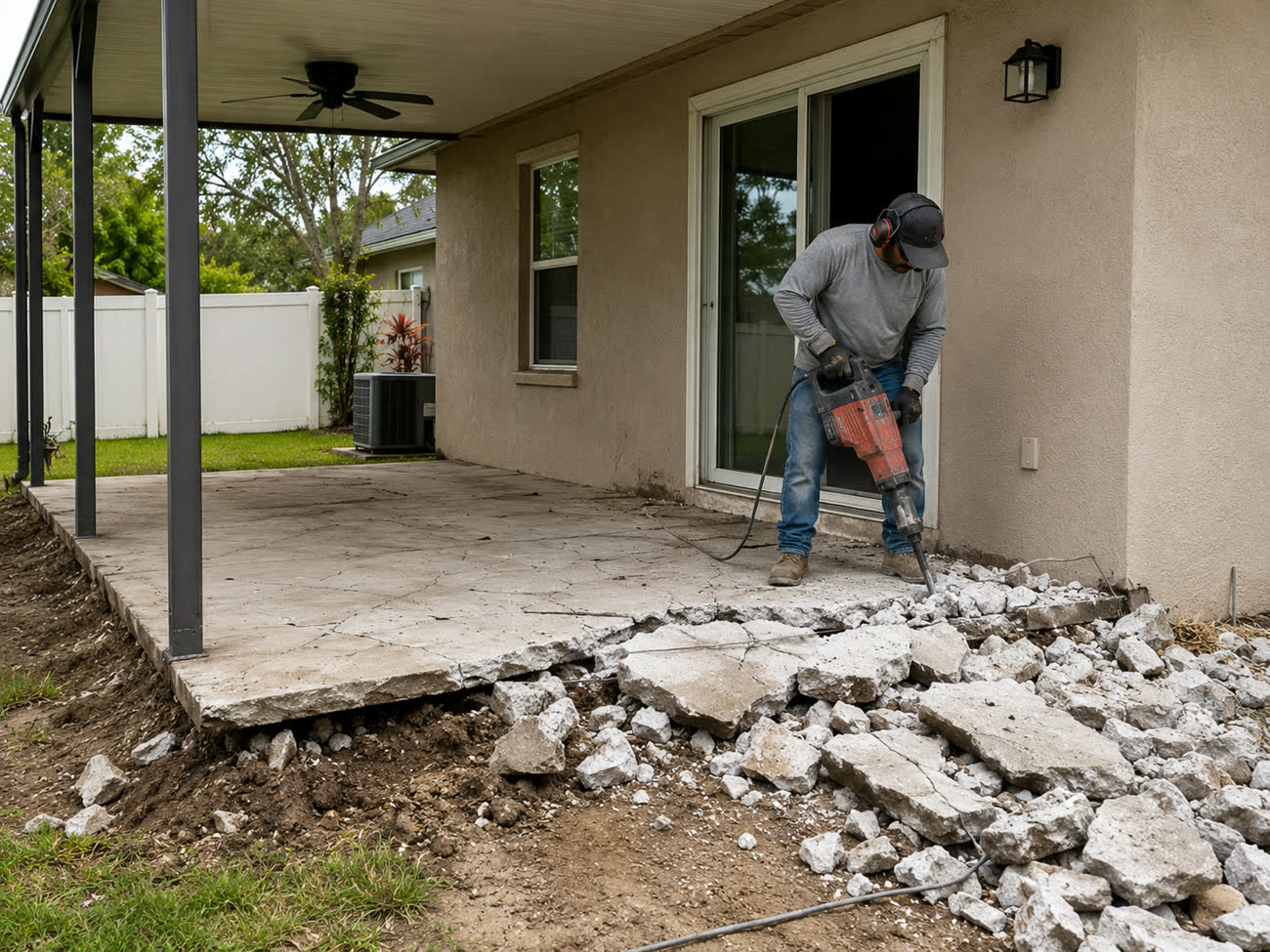
A patio sits closer to the house than almost any other concrete surface on a property — right against an exterior wall, a sliding door, or the steps leading down into the yard. Removing one means working in that tight space without disturbing what the patio is built up against, whether the whole slab is coming out or just a defined section of it.
That's different from a standalone slab removal, where the concrete sits apart from the house with nothing nearby to protect. A patio's boundary runs along the building itself, and it can also connect to a walkway, a pool-deck area, or other concrete extending from it. For Kissimmee, Florida properties, that might mean a rear lanai, a side-yard patio, or a covered concrete floor beneath a patio roof.
Overview
What Patio Removal Involves
Most of what makes a patio removal specific isn't the concrete — it's everything the concrete sits next to.
What This Service Typically Covers
- Breaking and removing patio concrete attached to or directly beside the house, including rear, side-yard and covered lanai surfaces
- Full patio removal, or removal of a defined section while the rest remains in place
- Patio concrete that may contain rebar or wire mesh, with reinforcement and thickness considered when the scope is reviewed
- Work planned around exterior walls, sliding doors, thresholds and steps the patio sits against
- Patios connected to a walkway, pool-deck area or other concrete, with the boundary between them defined before work begins
- Loading and hauling the broken concrete off site when the scope includes it
Details Confirmed During the Estimate
- Whether the project is a full patio removal or a partial removal with a defined boundary
- Which exterior walls, doors, thresholds, steps or patio-cover posts must stay undisturbed
- Where the patio connects to a walkway, pool-deck area or other concrete, and how that boundary is handled
- Access through gates or side yards for equipment and hauling
- The agreed post-removal condition of the area — grading, drainage slope and a replacement surface are separate work
This page focuses on removing the existing concrete patio. Whether patio covers, screen enclosures, landscaping, drainage work, grading, or a replacement surface are part of the broader project is confirmed separately.
Ready to Discuss Your Patio Removal Project?
Share a few details and get the scope reviewed.
When
When Patio Removal May Be Needed
Patios show wear differently than a driveway or open slab, mostly because of what's next to them. A section can crack or settle unevenly near the doorway or steps, sometimes enough to create a trip hazard at the threshold. Nearby roots, ground movement, exposure, and years of use may all contribute to visible changes in a patio, but the page does not diagnose the cause of a specific condition — the reason for removal is set by the owner and confirmed during review.
Just as often, the patio is sound but no longer wanted. A rear patio might be too small for how the yard is actually used, positioned wrong for a planned outdoor kitchen or pool addition, or simply dated compared to what's planned next. Removal also comes up mid-project — before pavers go down, before a covered addition is built, or before landscaping changes the space around it, the existing concrete has to come out first.
Process
How Patio Removal Is Approached
- 01
Reviewing the Patio and Confirming Boundaries
The patio is reviewed to confirm whether it's a full or partial removal, and what nearby features — the exterior wall, doors, thresholds, steps or patio-cover posts — need to stay undisturbed. Where the patio connects to a walkway or other concrete, that boundary is identified as well.
- 02
Clearing the Area and Confirming Access
Furniture and belongings are moved away from the patio, and access through gates or side yards is confirmed. Nearby irrigation, drains, lighting, landscaping, or other features that should remain undisturbed are identified ahead of time.
- 03
Breaking Out the Concrete
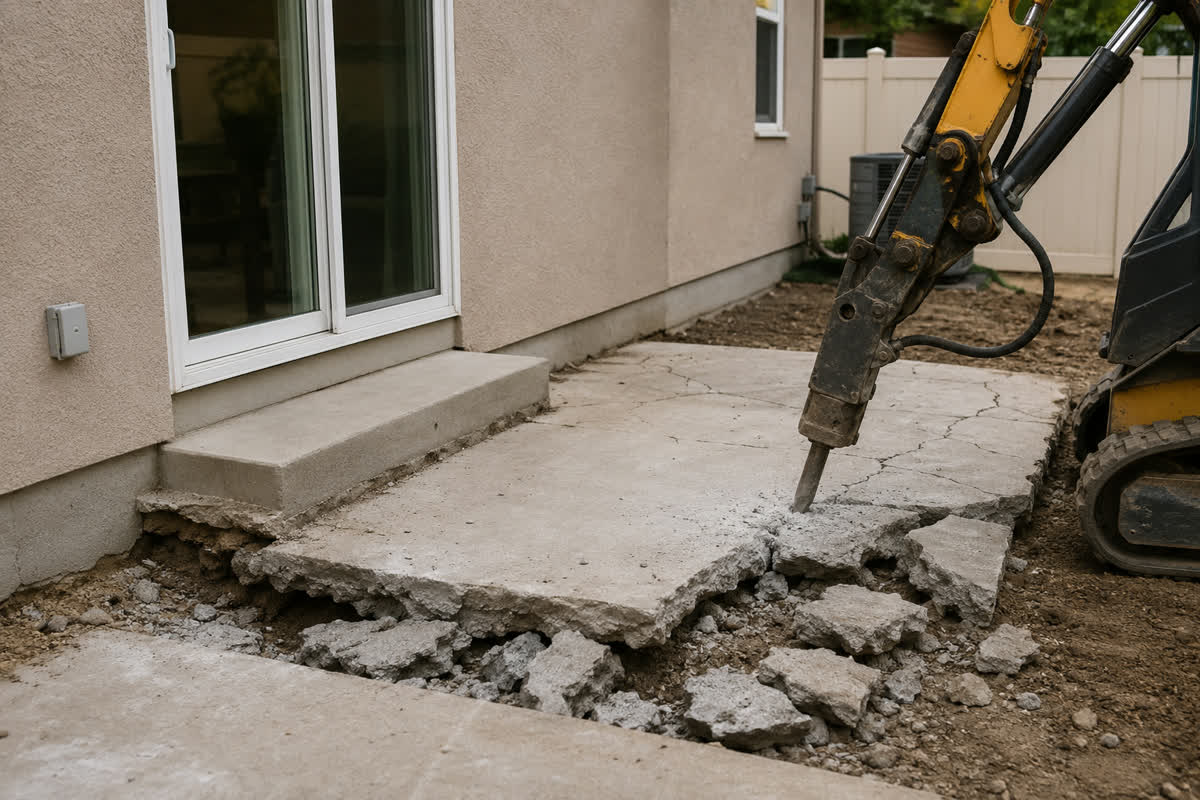
The concrete is broken or separated into manageable sections. Where only part of the patio is coming out, cutting may be used first to keep that edge clean against the concrete, wall or structure staying in place.
- 04
Handling the Broken Concrete and Debris
The broken concrete is handled according to the agreed scope, including whether hauling and disposal are part of it. What's left afterward — bare ground, exposed base, or something else — is whatever was defined beforehand; a replacement patio is separate work.
Scope
What Shapes the Scope and the Estimate
Patio dimensions and concrete thickness set the baseline, and reinforcement such as rebar or wire mesh affects how the slab breaks down. How closely the patio connects to or sits beside the house matters just as much — sliding doors, thresholds, steps and any patio-cover or screen structure nearby all shape how carefully the boundary is worked, especially on a partial removal where the adjoining concrete has to stay intact.
Access is its own concern on a patio, since equipment usually reaches the backyard through a gate or side yard rather than an open driveway. Nearby landscaping, irrigation, drains and known utilities factor in too, along with staging space and whether hauling is included. A patio's slope toward or away from the house is also worth being aware of — this page doesn't evaluate drainage, but the grade near the foundation is one more detail reviewed before a scope and estimate are set.
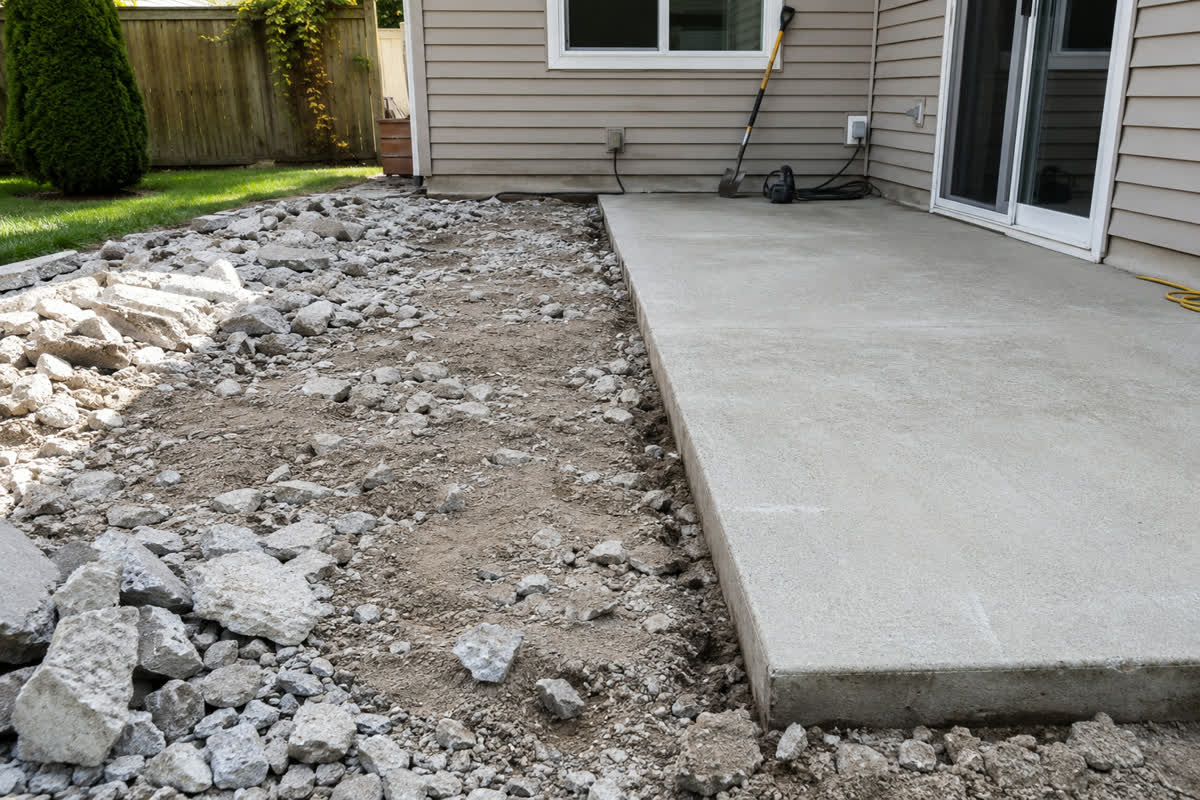
A partial removal keeps a clean boundary where adjoining patio concrete stays intact.
Not the Right Fit?
A patio removal fits when the concrete attached to or beside the house is what's coming out, full or a defined section. When only a boundary needs cutting so a section can be separated without removing it yet, that's concrete cutting instead. A standalone pad with no connection to the house is slab removal, and flatwork immediately around a pool is pool-deck removal. For larger, thicker or multi-section concrete beyond a single patio, concrete removal or demolition may be the better starting point.
Learn more about Concrete RemovalQuestions
Frequently Asked Questions
What happens to landscaping, irrigation or a walkway near the patio during removal?
Known irrigation lines, drains and landscaping nearby are identified ahead of time so the work can be planned around them, and a connecting walkway's boundary is confirmed as part of the scope.
Can just the section near the door or steps be removed instead of the whole patio?
Yes. A defined section can be removed while the rest of the patio and its boundary against the wall, door or steps stays in place, with the exact line confirmed during review.
Does patio removal address drainage or the way water moves near the house?
Patio removal addresses the existing concrete surface. Whether drainage evaluation, grading, or changes to the slope are included is confirmed separately, along with the condition in which the area should be left.
Is patio removal different from removing the concrete around a pool?
Yes. Pool-deck removal covers the concrete immediately surrounding a residential pool. Patio removal covers concrete attached to or beside the house — the two can sit right next to each other, but they're handled as separate scopes.
What if the patio is connected to a paver walkway or a future paver replacement is planned?
Removal covers the existing concrete patio itself. Pavers or any replacement surface that follows are a separate project, though describing the planned follow-up helps the removal boundary line up with it.
Ready to Discuss Your Project?
Review the available services and prepare the basic details of your project to request an estimate.